
- Home
-
About us
About us
- News
News- Products
Products- Project
Project- Investor
Investor- Contact
Compound fertilizer production line-
-
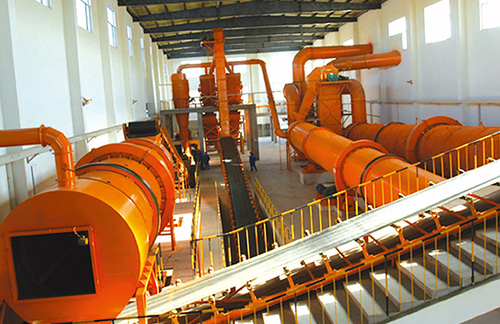
Description: The production process of Jiangsu Pengfei Group's compound fertilizer production line is usually divided into: raw material batching, raw material mixing, raw material granulation, particle drying, particle cooling, particle grading, finished film, and finished packaging. The compound fertilizer production line of Jiangsu Pengfei Group has the characteristics of low investment and good economic benefits. The layout of the complete equipment process is compact, scientifically reasonable, and technologically advanced. Energy saving and consumption reducing, no discharge of three wastes, stable operation, reliable operation, and convenient maintenance. Wide adaptability of raw materials, suitable for granulation of various raw materials such as compound fertilizers, pharmaceuticals, chemicals, and feed, with high granulation rate of products. Capable of producing various concentrations and types of compound fertilizers (including organic f...
+86-513-88755311 88755027
The production process of Jiangsu Pengfei Group's compound fertilizer production line is usually divided into: raw material batching, raw material mixing, raw material granulation, particle drying, particle cooling, particle grading, finished film, and finished packaging. The compound fertilizer production line of Jiangsu Pengfei Group has the characteristics of low investment and good economic benefits. The layout of the complete equipment process is compact, scientifically reasonable, and technologically advanced. Energy saving and consumption reducing, no discharge of three wastes, stable operation, reliable operation, and convenient maintenance. Wide adaptability of raw materials, suitable for granulation of various raw materials such as compound fertilizers, pharmaceuticals, chemicals, and feed, with high granulation rate of products. Capable of producing various concentrations and types of compound fertilizers (including organic fertilizers, inorganic fertilizers, biological fertilizers, magnetized fertilizers, etc.).
Production process
1. Raw material ingredients: urea, ammonium nitrate, ammonium chloride, ammonium sulfate, ammonium phosphate (monoammonium phosphate, diammonium phosphate, dicalcium phosphate, tricalcium sulfate), potassium chloride (potassium sulfate) and other raw materials are prepared in a certain proportion (based on market demand and soil testing results in various regions). 2. Raw material mixing: Mix the prepared raw materials evenly to increase the overall uniform fertilizer content of the fertilizer particles. 3. Raw material granulation: Send the mixed raw materials into a granulator for granulation (a rotary drum granulator or an extrusion granulator can be used). 4. Particle drying: Send the particles made by the granulator into the dryer to dry the moisture contained in the particles, increase their strength, and facilitate storage. 5. Particle cooling: The temperature of the dried fertilizer particles is too high, making them prone to clumping. After cooling, they are easy to store in bags and transport. 6. Particle grading: Classify the cooled particles, grind and re pelletize the unqualified particles, and sieve out the qualified products. 7. Finished film: Coating qualified products with film to increase the brightness and roundness of particles. 8. Finished product packaging: Pack the particles that have been coated with film, that is, the finished product, into bags and store them in a well ventilated area.
label:Compound,fertilizer,production- Previous: Cement grinding station
- Next: Active Lime Production Line


- News